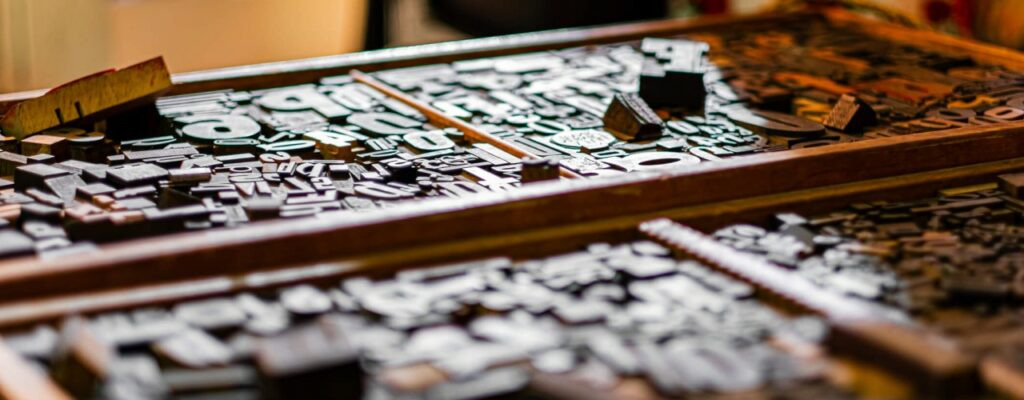
In an age of instant, flat digital print, the most effective designs engage multiple senses. Letterpress printing, with its distinct tactile impression, provides the solution designers and printers need to deliver a lasting, physical experience.
The entire design fidelity of any finished letterpress piece depends on the successful interaction between the polymer plate and the press driving the impression. This resulting mark, the deep, discernible “bite,” proves quality that less precise methods cannot replicate.
This article explores the technical advantages of professional letterpress plates and how their robust design ensures a premium finish, from perfect type registration to breathtaking custom illustrations.
How is the Consistent “Bite” of Letterpress Guaranteed by Plate Design?
The fundamental value proposition of letterpress is its mechanical texture, the “bite.” The plate achieves this deliberate, visible deboss when its raised surface presses ink and material into the substrate. Consistent impression requires precise control over the mechanics of the press and plate interaction.
Different from hot foil stamping, where the goal is a clean transfer and structural integrity, letterpress demands depth and tactile relief. The success of this impression relies on four interconnected technical factors inherent in the design of high-quality letterpress plates:
- Plate Calibration: Professional polymer plates provide exact, consistent relief height. This dimensional stability is critical. If the plate’s relief varies, the press cannot achieve uniform pressure, risking uneven ink transfer, fracturing lines, or an accidental punch-through.
- Photopolymer Durability: The best plates use a durable, resilient photopolymer that can withstand the extreme tonnage required to compress heavy-caliper cardstock. This material resists distortion and maintains the integrity of the finest typefaces and intricate design lines, even across large production runs.
- Undercut Management: The etching process must precisely control the plate’s “shoulder” or undercut. A poorly formed shoulder allows ink to transfer onto the non-image area, resulting in the undesirable “squash” or halo effect which is a condition that guarantees expensive material loss. Properly manufactured letterpress plates guarantee sharp, clean boundaries, preserving the design’s clarity.
- Register Accuracy: For multi-colour jobs, the plate maintains perfect squareness and stability. The consistency of the base material is paramount for ensuring that successive plates align precisely, allowing for vibrant, multi-layered designs without any drift or misregistration.
How Do Letterpress Plates Transform Digital Typography and Imagery?
The unique design characteristics achieved by letterpress plates elevate standard artwork into unique, tactile experiences.
Typography and Line Weight
In digital printing, type is just ink. In letterpress, physical pressure embeds the typeface. This action makes the negative space surrounding the letterforms feel intentional and deliberate.
Designers can use heavy paper stock to exploit this effect, giving the impression a palpable depth. The plate provides the necessary precision for perfect impression alignment. Unlike digital methods that struggle with extremely fine or heavy lines, professional letterpress plates are manufactured to handle a wide range of line weights, resulting in a cleaner, crisper edge thanks to the mechanical stability and high-quality polymer.
Intricate Custom Illustrations
Where intricate illustrations might look flat in offset or digital print, the deep impression of letterpress turns them into rich, high-relief artwork. The process naturally accentuates shadows and highlights, giving geometric patterns or ornate floral designs a three-dimensional quality.
When combined with the deliberate choice of uncoated paper, the subtle diffusion of ink into the paper fibres known as “kiss impression” creates a rich, matte texture. Controlled production delivers this specific quality. This is essential for luxury stationery and bespoke packaging.
Why is Press Precision Essential for Letterpress Plates and Consistent Impression?
The press must provide mechanical precision, otherwise the perfect letterpress plate fails to perform. Letterpress and hot foil stamping share the same fundamental requirement: the parallel contact of the die/plate and the platen.
For letterpress, this precision is necessary to:
- Control the Bite: Achieving a uniform impression across a large plate (e.g., for a background pattern or a full-page solid) requires the die-head to strike the base plate with absolute, even force. Any deviation leads to a shallow impression on one side and guaranteed stock loss from the die punching through the substrate on the other.
- Minimise Make-Ready Waste: A machine with superior parallelism reduces the time and material spent on make-ready (adjusting packing to compensate for uneven pressure). This improves production efficiency and directly lowers costs for the client.
A dedicated letterpress machine or a high-quality foiling press that structurally delivers this consistent, high tonnage is essential for realising the full design potential of modern letterpress plates.
The Final Investment That Guarantees the Imprint
The plate provides the physical foundation. Its polymer quality, accurate calibration, and the press’s consistent, high-pressure capabilities synthesize to directly produce the unique, beautiful results and communicate value through tactile quality.
For designers and printers who want to deliver work that leaves a lasting, tactile mark from high-end business cards to bespoke packaging the precise engineering of the plate and the machinery is the most important investment.
If you are looking to elevate your product range by introducing the unmistakable quality of deep-impression letterpress, our engineers can advise you on the right polymer plates and press configurations needed to ensure production reliability and superior finish. Contact us today to discuss how our solutions achieve maximum design fidelity.

Written by Metallic Elephant