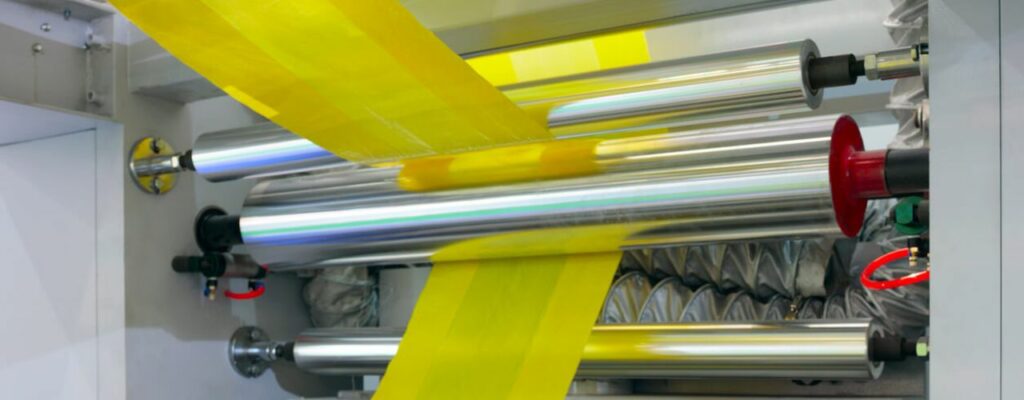
Searches for a foil printing machine often come from teams chasing one outcome: consistent, high‑quality results on demanding designs. In many professional environments, that search resolves to a review of hot foil presses. Monograms and metallic finishes surface problems faster than most other work because they place tight demands on control. Where that control slips, flaws appear quickly.
Teams achieve consistent results when they stop chasing individual adjustments and treat setup variables as a connected system. When a foil printing machine delivers stable heat and controlled pressure from one run to the next, both fine monograms and large metallic areas become predictable instead of problematic.
Why Do Monograms and Metallic Foil Designs Fail First?
Monograms and metallic designs act as stress tests. Fine monogram detail shows edge definition and impression depth problems immediately, often at the outer strokes and tight counters. Metallic solids expose pressure distribution issues across wider areas, where coverage starts to fall away at the corners or centre. Both demand consistency, but they reveal loss of control in different places and at different stages of a run.
Because these designs respond immediately to variation, they often show problems that remain hidden on simpler work. A foil printing machine that performs acceptably on general jobs can struggle as soon as detail density increases or coverage expands. For experienced operators, these failures are signals that setup, not process choice, needs attention.
How Do Professionals Set Up a Foil Printing Machine for Consistent Results?
Professionals achieve consistency by working through setup variables in a fixed order, rather than reacting to multiple settings at once.
Experienced teams approach flawless foiling in a deliberate order, supported by well-built equipment and experienced engineers. They start by establishing a clean, uniform impression through make‑ready. Only once contact is consistent do they stabilise heat. Dwell or contact time follows, coordinated with temperature to suit the foil and substrate. Pressure is adjusted last to support transfer and avoid compensating for instability.
Following this sequence prevents teams from chasing defects by increasing pressure or temperature too early. When the foundation is correct, adjustments become measured decisions instead of repeated trial and error.
How Does Make‑Ready Affect Monograms and Metallic Foil Designs?
Make‑ready plays a significant role in determining outcomes. For monograms, it supports sharp edges and consistent depth across fine strokes and tight counters. Any unevenness shows up immediately as broken lines or filled detail.
Metallic solids place a different demand on the foil printing machine, particularly when paired with the correct hot foil dies. Coverage across larger areas relies on even pressure distribution. Inadequate make‑ready often leads to patchy transfer or weak corners, even when temperature and dwell appear correct. Treating make‑ready as design‑specific, instead of generic, removes many problems before they reach the press controls.
How Do Heat and Dwell Time Affect Foil Transfer Quality?
Heat and dwell work together. Increasing temperature without considering contact time often creates edge issues on monograms and inconsistent sheen on metallic areas. Longer dwell at controlled temperatures can improve transfer without introducing excessive pressure.
Operators who work this relationship correctly tend to make fewer adjustments once a run is underway. Instead of escalating settings, they coordinate heat and dwell so the foil releases cleanly and predictably. This approach reduces waste and protects detail across both fine and bold designs.
How Does Pressure Affect Foil Printing Consistency?
Pressure should reinforce stability, not mask instability. On monograms, uneven pressure shows up as variation across strokes or loss of definition at the edges. On metallic solids, it appears as mottled coverage or inconsistent reflectivity.
When a foil printing machine applies pressure evenly across the die face, impressions hold steady from cycle to cycle. Operators no longer need to chase small variations as a run progress, which makes repeat work easier to schedule and removes hesitation when committing premium jobs to press.
How Do You Troubleshoot Common Foil Printing Defects?
Diagnosing issues by outcome is more effective than adjusting at random.
Monogram‑related symptoms often include broken lines and filled counters, with unwanted pickup appearing when control drifts. These usually point to uneven impression, misaligned dwell and heat, or excessive pressure applied too early.
Metallic‑related symptoms include patchy fill and weak corners, with sheen inconsistency indicating uneven transfer. These are commonly linked to pressure distribution, insufficient contact, or unstable heat across the run.
In both cases, controlled testing is essential. Changing one variable at a time and observing the result helps teams identify the cause and lock in a stable setup.
How Do Design Choices Affect Monogram and Metallic Foil Printing Results?
Design choices influence how forgiving a job will be on press. Dense monograms with fine strokes demand higher control, as any variation becomes visible immediately. Large metallic areas raise expectations around pressure uniformity and transfer consistency.
Understanding these demands helps align design intent with production reality. When teams anticipate which features place the highest load on the foil printing machine, they can plan setup accordingly and avoid avoidable adjustments later.
How Can You Achieve Consistent Foil Printing Results Over Time?
Teams achieve long-term consistency by recording what works and repeating successful setups under the same operating conditions. Successful jobs provide a reference point for future work when teams log substrate type, foil selection, and final settings. Over time, this builds a library of proven setups.
When teams build repeatability into the process, setup time reduces and confidence increases. Operators spend less time compensating for uncertainty and more time planning production with predictable outcomes.
What Should Consistent, High‑Quality Foil Printing Look Like in Production?
When teams establish control, monograms and metallic designs stop being exceptions and become part of routine production. A foil printing machine that behaves predictably allows teams to focus on scheduling, quality, and repeat work instead of continual correction.
If you produce demanding finishes and want to discuss how to achieve consistent results across future jobs, you can speak directly with the team via the contact page to explore your requirements in detail.

Written by Metallic Elephant