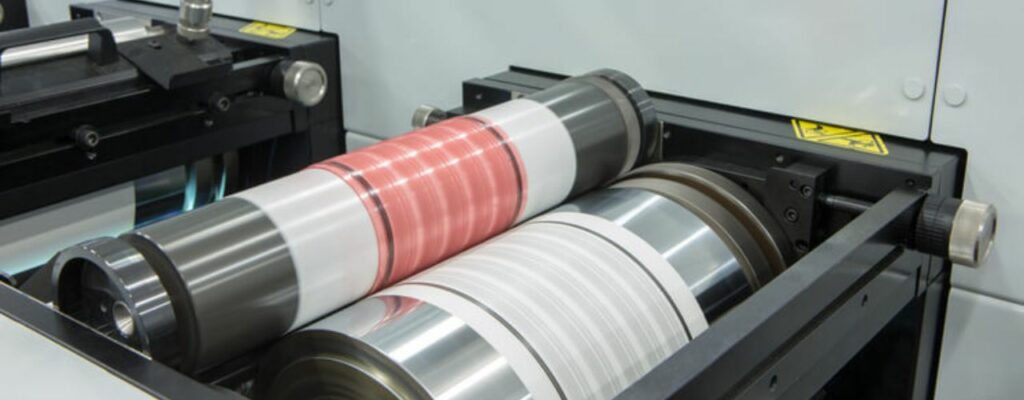
Choosing between photopolymer plates and laser‑etched plates changes how a press performs under commercial load. Impression stability, makeready time and repeatability vary by method, and those differences affect remake risk and cost control. What matters is how each method performs in production, so plate selection supports tolerance demands instead of introducing variability.
No single method fits every production setup. Tolerance requirements, workflow structure and production scale determine suitability.
In commercial production, controlled exposure workflows give photopolymer plates consistent relief depth and repeatability. Engraving calibration and machine precision govern tolerance in laser‑etched plates. The practical difference lies in where teams place workflow control and how they manage operational risk under sustained press load.
How Photopolymer Plates Are Produced
Technicians create photopolymer plates through controlled UV exposure. A film negative transfers the image onto a light‑sensitive polymer sheet. Exposure hardens the image areas, and washout removes unexposed material to form relief. Incomplete washout can leave shallow shoulders that affect ink transfer and edge definition. Drying and post‑exposure curing bring the plate to final hardness and depth.
In commercial production, exposure calibration, washout control and material stability drive consistency. When teams standardise processing, photopolymer plates deliver repeatable relief depth across batches. Thickness tolerance and controlled backing systems support predictable setup on press. Plate thickness variation often appears as packing adjustment rather than press instability. Engineered plate systems manufactured with controlled thickness tolerance can reduce that adjustment at source, which is why commercially specified systems such as those outlined on the Metallic Elephant polymer plates page detail approaches to depth consistency and dimensional control.
Processing discipline matters. Overexposure reduces relief definition. Underexposure weakens durability. When operators control the workflow, depth and edge clarity can remain consistent across repeat runs.
How Laser‑Etched Plates Are Produced
Laser systems engrave plates directly with calibrated beams. Digital files guide the engraving head, which cuts the design into the plate material. Beam intensity, engraving speed and material response control depth. Minor calibration drift at this stage can translate into measurable variation in relief height.
This method can remove the film stage and integrate with digital workflows. Machine calibration and beam control determine engraving precision. Material choice influences depth accuracy and surface finish, which in turn affects inspection consistency and rejection risk in repeat packaging work.
Laser systems demand capital investment and disciplined calibration. Maintenance intervals and beam consistency shape long‑term depth control. When operators maintain stable engraving parameters, results tend to remain controlled. When calibration drifts, depth variation can appear.
How Do Photopolymer Plates Compare to Laser‑Etched Plates on Press?
You see the difference once the press runs at volume.
Impression Depth Control
• Photopolymer plates
– Exposure and post‑cure processing set relief depth
– Calibrated exposure workflows maintain consistency
– Stable backing and packing keep compression behaviour predictable, provided packing creep does not develop over long runs
• Laser‑etched plates
– Engraving parameters set depth
– Beam calibration and material characteristics drive precision
– Substrate changes often require recalibration of depth and pressure assumptions
Makeready and Setup Stability
• Photopolymer
– Standard plate thickness simplifies setup
– Established mounting systems support alignment
– Standardised workflows keep repeat jobs predictable when operators maintain consistent plate handling
• Laser‑etched
– Direct engraving removes film preparation
– Engraving accuracy shapes setup consistency
– Ongoing calibration supports stability
Long‑Run Behaviour
• Photopolymer
– Material hardness and applied pressure determine wear
– Controlled press settings and stable thermal conditions maintain performance across volume
– Tightly managed exposure workflows support sustained commercial runs and protect relief floor integrity
• Laser‑etched
– Substrate choice and engraving medium influence durability
– Calibration discipline and material compatibility govern performance
– Engraving depth consistency shapes long‑run wear characteristics
Batch‑to‑Batch Repeatability
• Photopolymer
– Controlled exposure workflows support reproducibility
– Standardised processing supports repeat packaging and campaign reorders
• Laser‑etched
– Machine precision and parameter stability determine repeatability
– As engraving tolerances shift, variation increases over time and becomes more visible across repeat orders
Buyers and production managers should focus less on theoretical resolution and more on how reliably each system maintains repeatability across volume. In repeat packaging work, minor variation across batches becomes visible when finished products sit side by side. Consistency reduces remake risk and protects schedules.
If repeatability drives commercial success, validate plate tolerance and workflow control before scaling volume. Engineers who understand commercial press performance can assess how plate selection influences that risk.
Production pressure exposes weaknesses in plate tolerance quickly. A direct conversation about your current setup, run length and repeat requirements can clarify where variability sits and what to adjust before it becomes expensive.
What Are the Workflow and Cost Differences Between Photopolymer and Laser‑Etched Plates?
Plate production affects more than press performance. It shapes turnaround time, remake cycles and capital allocation.
Photopolymer processing requires controlled exposure equipment and washout systems. Stable workflows keep remake cycles predictable and material costs consistent. Many businesses outsource this process to support flexible capacity planning.
Laser engraving systems require higher upfront investment. In‑house capability shortens certain prepress stages, but teams must manage maintenance, calibration and operator training. Operators must maintain engraving accuracy to prevent depth variation across jobs.
Plate method shifts operational risk into either exposure control or calibration control. Tolerance control and calibration discipline influence cost predictability over time.
When Should You Choose Photopolymer Plates?
Repeat packaging and brand‑controlled commercial production often favour photopolymer plates because they provide predictable tolerance control within established production structures and reduce downstream variability in repeat runs.
Consider photopolymer when you run:
– High‑volume repeat packaging
– Brand‑controlled applications with defined tolerance limits
– Standardised prepress workflows
– Press setups that require predictable compression behaviour
Controlled exposure processing keeps relief depth stable across production cycles. You can review commercial polymer plate systems designed for repeatability and tolerance control on the Metallic Elephant polymer plates page.
When Is Laser Etching the Right Choice?
Laser engraving suits operations that prioritise fully digital workflows or already maintain calibrated engraving infrastructure.
Consider laser when you need:
– To remove film dependency
– Direct digital integration
– Specific engraving depth parameters
– To leverage existing capital investment in laser equipment
Strong calibration discipline and material compatibility determine performance over time.
Decision Framework for Production Managers
Align plate selection with production stability rather than novelty.
Before committing, assess:
– Required depth tolerance
– Job repetition frequency
– Control level within exposure or engraving workflow
– Acceptable remake risk
– Predictability of replacement cycles
In commercial production, plate tolerance often drives issues that teams attribute to press instability. Plate choice influences press stability, cost control and schedule protection. If repeat packaging under volume defines your business, do not treat plate tolerance as a secondary variable. Choose the method that maintains repeatability under load.
If you evaluate photopolymer plates for commercial production, review tolerance requirements and repeatability with engineers who understand press performance under sustained pressure. Explore commercial systems on the Metallic Elephant letterpress page or speak directly with Metallic Elephant engineers to assess how plate selection fits your workflow.

Written by Metallic Elephant