Most of the industry views hot foil stamping only as a method for adding metallic finishes like gold, silver, and rose gold accents. These finishes are foundational to luxury branding, but professional hot foil's actual value lies in its versatility across materials and finishes.
A high-precision hot foil press resolves design limitations. In this article we explore the material science and operational advantages of professional hot foil. We argue that substrate versatility and the capability to achieve non-metallic, tactile finishes differentiate this process for high-value bespoke projects.
Hot Foil vs. Cold Foil: Why Depth Matters for Versatility
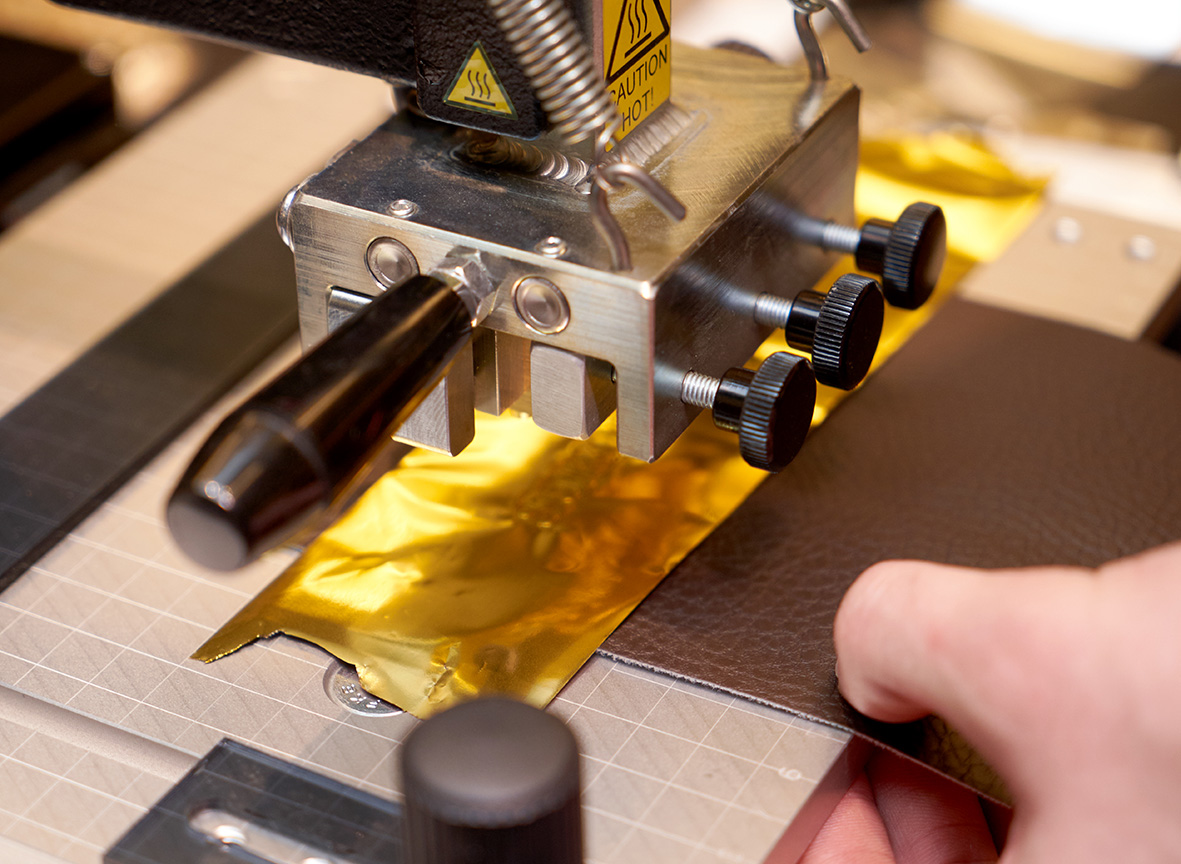
To understand true versatility, start with the fundamental difference between hot and cold foiling. Cold foiling is an adhesive process that is fast but lacks the tactile quality. Hot foil, conversely, is a thermal-mechanical process that relies on a heated die and immense pressure. This essential difference delivers the deep, permanent impression or deboss that distinguishes high-end, versatile work. Physically embedding the foil means superior adhesion on porous, fibrous, or textured materials. This makes hot foil the non-negotiable choice for projects requiring both visual and tactile quality.
What Non-Metallic Finishes Can Hot Foil Stamping Achieve?
The wide selection of available foils means designers are not limited to a reflective finish. Using pigmented, matte, or holographic foils allows for adjusting the design's sensory impact. This is a key factor in the current market.
Matte Foils
- Design Benefit (Sensory Impact): Non-reflective and sophisticated. Absorbs light to create a velvety, deep black or primary colour effect.
- Business Advantage (Practicality): Ideal for minimalist or technical branding where texture is more important than shine .
Pigmented Foils
- Design Benefit (Sensory Impact): Vibrant and opaque non-metallic colours (e.g., bright white, neon green, safety yellow) provide flawless, even coverage.
- Business Advantage (Practicality): Allows foiling on dark or coloured substrates where standard ink would be lost, guaranteeing colour fidelity.
Holographic/Security Foils
- Design Benefit (Sensory Impact): Creates multi-dimensional, light-refracting effects that shift colour based on the viewing angle.
- Business Advantage (Practicality): Essential for high-end luxury packaging and security applications, preventing counterfeiting and justifying a premium price tier.
When a print business masters the application of these diverse finishes, it offers a far richer selection of sensory design solutions. This process moves the service offering past the functional limits of digital or cold foil applications.
Can Hot Foil Stamping Be Used on Difficult Materials Like Leather and Plastic?
High-precision hot foil stamping's most significant operational advantage is its reliable stamping of challenging substrates where other methods fail. Heat combined with consistent, high pressure ensures deep, permanent adhesion.
1. Textured and Heavy-Caliber Paper
No other method matches hot foil when operators work with textured stocks (such as cotton or felted paper) or extremely heavy-caliber card.
- Process: The heat softens the foil's adhesive, and the die's high pressure forces the foil and substrate together. This results in a clean transfer that simultaneously debosses into the material's texture.
- Business Aid: This capability allows printers to target the high-margin stationery, wedding invitation, and premium business card markets, where the tactile quality of a deep impression on heavy stock is non-negotiable.
2. Leather and Synthetic Materials
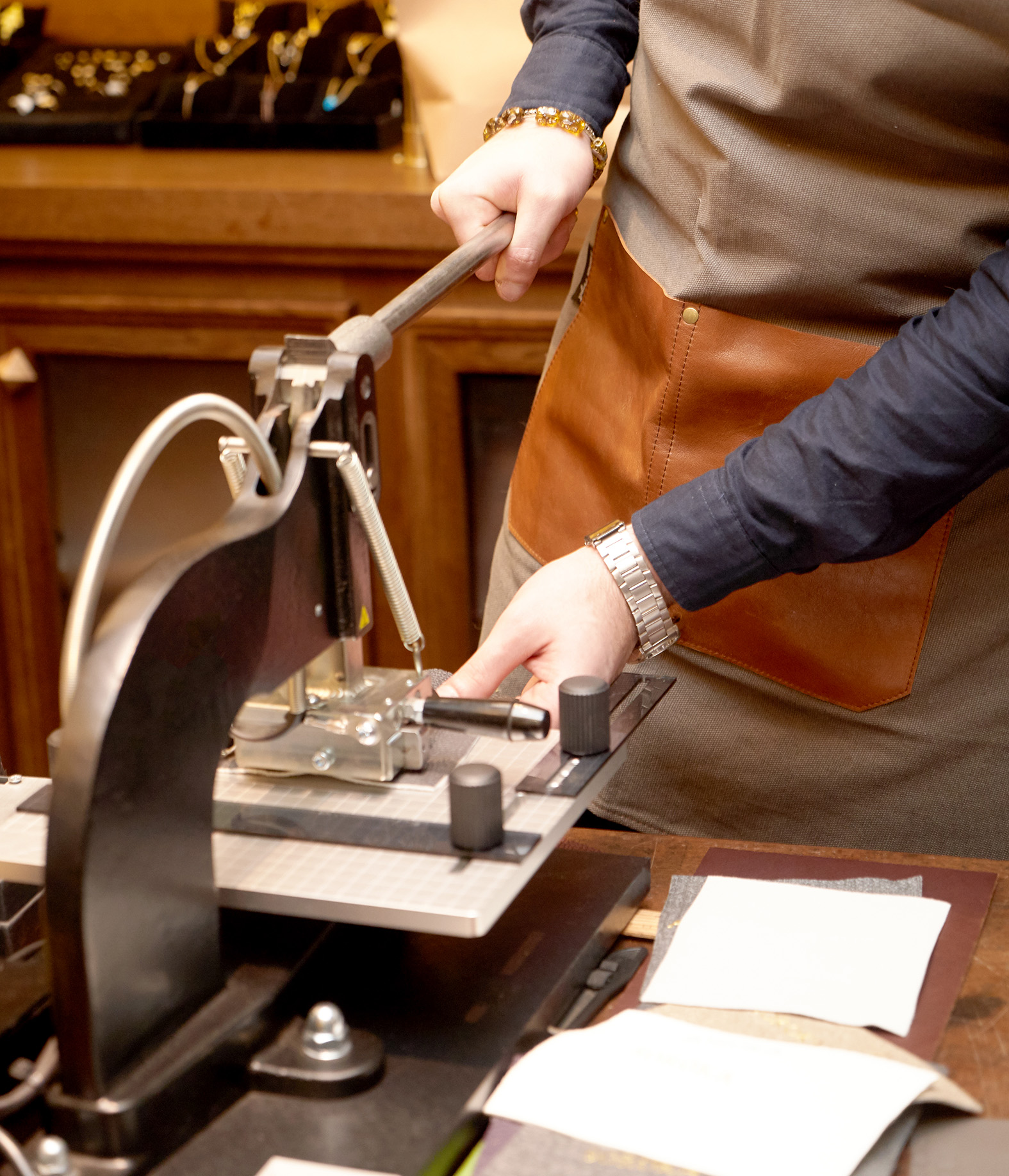
Leather is a core application for hot foil; it requires specific heat and pressure controls to achieve permanent debossing without scorching the material.
- Process: The press must deliver consistent tonnage across the entire surface of the die. This guarantees uniform adhesion and a clean deboss without damaging the delicate surface finish of leather goods, wallets, or passport covers.
- Business Aid: The capability opens lucrative opportunities in bespoke merchandise, branded corporate gifts, and luxury accessory customisation. Projects far removed from standard print work.
3. Plastics and Packaging
Foiling plastics (PVC, polypropylene) often involves lower temperatures and specific pressures to avoid deforming the material while ensuring foil release.
- Process: The press's control system holds the technical mastery, allowing operators to fine-tune the dwell time and temperature to match the polymer's thermal requirements.
- Business Aid: This method allows entry into the durable goods and high-end packaging sectors, where the foil acts as a durable, attractive finish that withstands handling and environmental exposure.
How Can I Maximise Efficiency and Reduce Downtime on My Hot Foil Press?
Versatility encompasses both the range of materials you can handle and the speed at which you can switch between them. For a business handling diverse short-run jobs moving from a leather run to a carton board package job minimises hot foil changeover time which is fundamental for profitability.
Engineers build professional presses with quick-change die systems and precise registration mechanisms. These features allow operators to rapidly switch the heated plate (die) and reposition the jig, maintaining perfect registration with minimal effort. This reduced setup time means your operators spend less time on manual adjustments and more time running profitable jobs. This directly optimises workflow and throughput.
Integrating Hot Foil with Advanced Print and Finishing Techniques
A versatile finishing solution must be compatible with other high-end print processes. Operators perfectly integrate hot foil stamping with embossing and debossing to create sculpted, multi-level designs that add genuine texture and depth. Furthermore, the robust adhesion achieved through heat and pressure allows for superior foil registration with print meaning you can foil directly onto or around existing digital or offset ink with absolute precision. This integration capability allows designers to layer finishes, increasing visual and tactile impact while maintaining a smooth, efficient workflow for complex jobs.
What Engineering Features Are Essential for Press Versatility?
Achieving flawless results across these finishes and materials requires meticulous heat management and absolute mechanical precision.
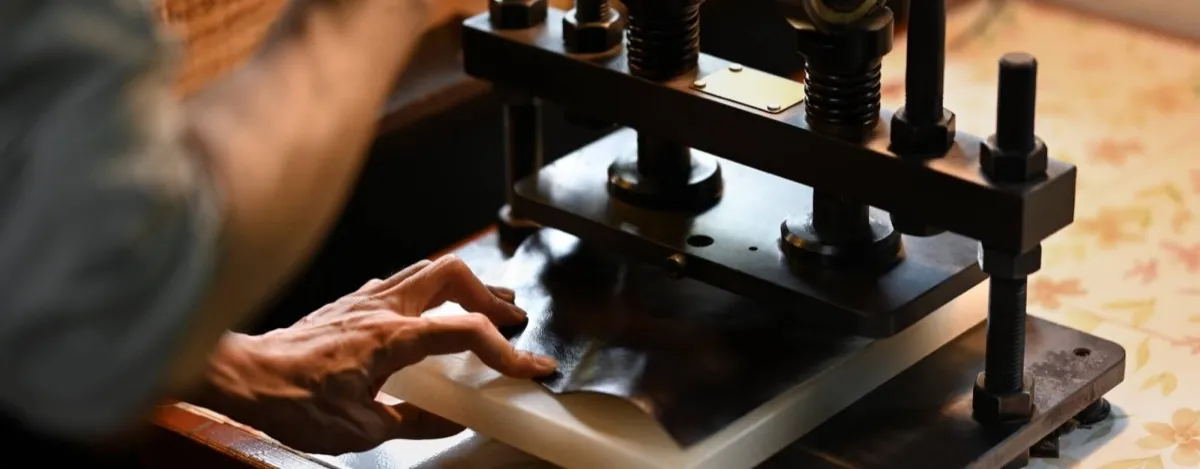
- Consistent Tonnage: When stamping a delicate plastic case, fine-tuning the pressure is necessary. When stamping a thick leather belt, the press requires reliable, high tonnage. A versatile press delivers this range without structural flex.
- Accurate Temperature Control: Different foils and substrates require specific temperatures (often within a narrow 5-degree window) for optimal release and adhesion. A professional system ensures this temperature is maintained consistently across the entire die surface.
- Strategic Die Material Selection: For short runs on paper, cost-effective magnesium may suffice. However, achieving consistent, high-volume adhesion on difficult materials like synthetics, leather, or heavily textured card demands the superior durability, heat transfer, and precision of CNC-machined brass dies . This choice is necessary for professional quality and longevity.
The ability to deliver exceptional quality, whether it's a subtle matte finish on thick card or a vibrant pigment on synthetic leather, justifies the investment in a professional hot foil press. It is the only way to reliably expand your bespoke design service offering.
If your business seeks to offer unparalleled material and finish versatility to the bespoke design sector, our engineers advise on the right press and die configurations to maximize your service capabilities and elevate your revenue streams. Contact us today to discuss how our solutions achieve maximum material versatility.