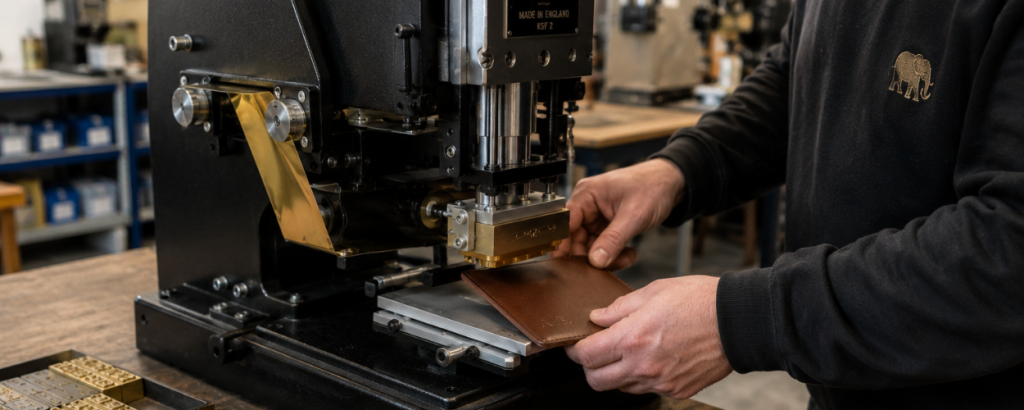
A clean mark on leather depends on far more than choosing a press that looks compact or easy to use. Leather tends to show a weak setup quickly. One item may take the impression well, while the next can expose problems with pressure, positioning, or access.
We start with the work itself, because the right setup for leather personalisation comes down to how the product sits under the press, how repeatable the result needs to be, and how well the machine suits the job from the outset.
What should a stamping machine for leather do well?
A reliable stamping machine for leather needs to do more than make an impression. It needs to hold steady heat, apply even pressure, maintain alignment, and give you enough access for the products you actually stamp.
That matters more on leather because the material does not always forgive a weak setup. Surface texture can vary. Some items sit flat and open. Others have bulk, seams, or harder-to-reach positions that make the job less straightforward. A machine may seem fine on a simple test, then start showing its limits once the work becomes more varied or more regular.
In practical terms, the press should help you place the item cleanly, repeat the mark with confidence, and keep the setup controlled when the product changes slightly. If those basics are missing, the problems show up early. Fine detail becomes less dependable, foil transfer can turn patchy, and repeat work takes longer than it should.
Does the type of leather product change the machine you need?
Yes, and this is often where the real decision sits.
Small goods such as wallets, notebook covers, tags, and straps usually suit a more compact setup. If the work is flat, accessible, and fairly contained, a smaller hand press can make good sense. At Metallic Elephant, this is where presses such as the KSF 1 and KSF 1 Mini come into their own. They are positioned around smaller leather goods, notebooks, and personalisation work, which makes them sensible starting points when the product range fits that scale.
Larger items ask different questions. Bags, satchels, and bulkier goods can make access harder, even when the stamped area itself is not especially large. A press can look suitable on paper, then feel restrictive once you need to reach a deeper position or hold the item comfortably under the head. That is where a machine such as the KSF 2 starts to make more sense, because it is built for larger items and harder-to-reach areas.
The right stamping machine for leather depends less on broad beginner status and more on product shape, working area, and how repeatable the job needs to be.
The right press depends on the products you make, the access you need, and how repeatable the work has to be. If you are weighing up different options, contact us to narrow down the most suitable setup before choosing a machine that may feel limiting once the work develops.
Is a beginner-friendly machine always the right choice?
Not always. It is easy to assume a simpler or smaller machine will be the safest starting point. In practice, the better question is how well the press suits the work you want to produce.
A compact press can be the right answer when the products are small, the stamp position is easy to reach, and the output stays within that range. Problems tend to appear when the machine feels convenient at first but starts to limit positioning, access, or consistency once the work becomes more regular. That is often the point where buyers realise they chose for footprint or simplicity instead of fit.
We prefer to match the press to the product from the start. That usually leads to a better stamping machine for leather choice than focusing on size alone. That is why the range covers different working sizes and access needs rather than forcing every job through the same kind of setup.
What should you ask before buying a stamping machine for leather?
Before you choose any stamping machine for leather, start with the work itself. Look at the products you plan to stamp most often, the position of the mark, the level of detail you need to hold, and how often the same job is likely to repeat.
A buyer working on card holders, notebook covers, and smaller personalised pieces will usually have different needs from someone marking bags or larger structured goods. The same applies to volume. One-off testing can hide limitations that become obvious once you start repeating the job across a short run.
We find it helps to ask a few plain questions. Does the item sit comfortably in the machine. Is the stamped area easy to reach. Will the press still feel practical once the work becomes more consistent. That kind of thinking usually leads to a better decision than judging the machine by size alone.
Why does the rest of the setup still matter?
The press matters, but it is only part of the result. Die quality, make-ready, and the way the product sits under the head all affect the finish.
At Metallic Elephant, our brass dies are positioned around sharp definition, heat retention, and long-running performance, which is worth remembering if you want repeatable results over time. A good press paired with the wrong setup will still make the job harder than it needs to be.
That is another reason to think in terms of the whole working setup rather than the machine in isolation. Clean leather personalisation depends on control across the process, not on a single headline feature.
Why getting the machine choice right at the start saves time later
The best stamping machine for leather is the one that suits the products you make, the access those products require, and the level of consistency you want from the outset. At Metallic Elephant, we build our presses around those practical differences, because the right setup should feel usable on real jobs, not only in theory.
If you want help narrowing down the right option, contact us and talk through the type of leather work you plan to produce.
Frequently Asked Questions
Can you use a hot foil press on thick leather?
Yes, but the result depends on more than thickness alone. The way the leather sits under the head, the position of the mark, the die, and the make-ready all affect the finish. Thicker leather can still stamp well, but the setup needs to suit the product and the position you are trying to reach.
Do brass dies make a difference in leather personalisation?
They can. A well-made brass die is known for sharp definition, good heat retention, and long-running performance, which matters when you want repeatable results across multiple impressions. That is one reason die choice should be part of the buying decision, not an afterthought once the press is chosen.
How do you choose a leather personalisation machine for future growth?
Start by looking at the products you expect to stamp most often, then think about what is likely to change. If the range may expand from smaller flat goods into bags, deeper products, or more regular repeat work, the first machine should leave room for that shift. A press that suits today’s test pieces but struggles once the jobs broaden can become limiting quite quickly.

Written by Metallic Elephant